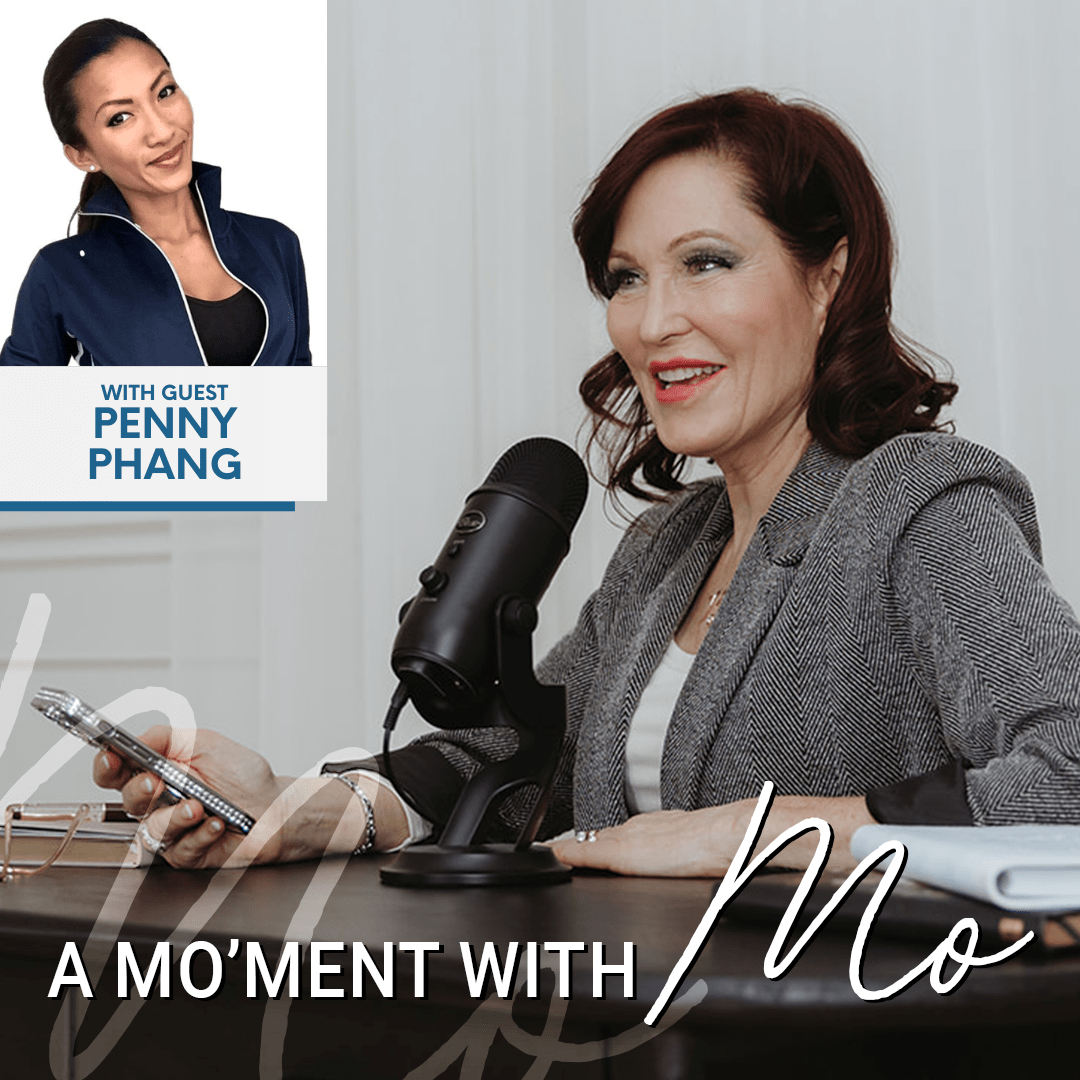

A Conversation with Penny Phang
Mo: Penny, welcome to the show. I am so happy to have you here.
Penny: Thank you, Mo. It is wonderful to be here. Reconnecting with you after so many years feels like perfect timing.
Mo: It really does. Today we are talking about leadership, emotional resilience, stillness, and how to move from reaction into alignment. Before we dive into your work, can you share a little about the journey that led you here?
Penny: My work grew out of my own experience moving through depression and PTSD following a traumatic childhood. For many years, I overachieved without realizing I was trying to compensate for feelings of not being enough. On the outside, I looked successful, but underneath there was pressure, exhaustion, and unresolved pain.
Penny: Over time, I began exploring stillness, breathwork, movement, emotional awareness, and different ways of reconnecting with myself. Those practices helped me move through depression and eventually became the foundation of my Self-Empower work.
Mo: I love that you describe that journey not only as something difficult, but also as a gift that helped you discover your purpose.
Penny: Exactly. I did not set out to create a method or teach anyone. I had to look back and reverse-engineer what had helped me heal. That is how Self-Empower began.
Mo: You work with leaders and high performers who often look composed and successful on the outside. What are you seeing beneath the surface?
Penny: Many leaders quietly believe they are not allowed to struggle. They feel pressure to be perfect, have all the answers, and never show doubt. Even when that pressure is unconscious, it can create stress, anxiety, self-criticism, and a constant need to prove their worth.
Penny: When the mind and heart are no longer working together, we become out of alignment. We may still get things done, but it feels forced. We lead from fear, pressure, and the need to keep up instead of from clarity and purpose.
Mo: What is the first step toward finding that alignment again?
Penny: Stillness. When I say stillness, I do not mean doing nothing. You can be moving, working, speaking, and making decisions while remaining rooted in calm. You can be quick without being in a hurry.
Penny: Stillness helps us access a deeper intelligence within ourselves. When we slow down enough to listen, we begin receiving clarity one moment at a time. We may not see the entire path ahead, but we can recognize the next step.
Mo: You also talk about following the path of least resistance. What does that mean?
Penny: It means meeting yourself where you are. When I was deeply depressed, positive affirmations would not have helped me. They were too far away from what I was feeling. Anger, however, was a higher emotional state than despair, so allowing myself to feel angry could help me move forward.
Penny: The path of least resistance is not the same for everyone. It is simply the next thought, feeling, or action that helps move you slightly above where you are right now.
Mo: In a culture that celebrates hustle and constant productivity, how can stillness become a leadership strength?
Penny: Leaders can accomplish a great deal without stillness, but it often comes at a cost. Over time, excessive resistance can lead to stress, anxiety, exhaustion, and dis-ease.
Penny: Sustainable leadership requires access to something deeper and more dependable than external conditions. Stillness gives leaders a stable place from which to think, respond, and make decisions. That is where clarity becomes a true advantage.
Mo: You have also shared a simple way to manage difficult thoughts before they take over. Can you explain that?
Penny: I call it the combustion of thought. A thought begins gaining momentum quickly, and if we continue focusing on it, more similar thoughts join it. That is why I encourage people to give themselves up to 60 seconds to fully feel an emotion without judgment.
Penny: Resistance is not wrong. We need some resistance to generate power, just as a battery needs positive and negative energy. The key is not staying there. After 60 seconds, ask whether this is a thought you want to continue feeding. If not, swipe to the next thought.
Mo: I love that. We are so good at swiping past content on our phones, but we can learn to do the same with thoughts that are no longer serving us.
Penny: Exactly. The brain is constantly feeding us content. Some of it matters and some of it does not. We have to become more intentional about what we choose to amplify.
Mo: How can leaders recognize when they are reacting instead of acting from alignment?
Penny: Your emotions will tell you. When you are aligned, you may still feel pressure, but you also feel clear, curious, open, and willing. When you are reacting, you tend to feel stuck in stress, fear, doubt, or resistance.
Penny: My practice is to observe and then lead. Take a breath, soften your vision, and notice what is happening within you. You are not your thoughts. You are the quiet presence observing them.
Mo: And once we observe the thought, how do we decide what to do next?
Penny: Ask yourself three questions. Is this a thought I want to say yes to and amplify? Is there an action I can take right now, or am I simply worrying? What is my right-now action?
Penny: Sometimes the answer is to finish the email in front of you. Sometimes it is to drink water, take a break, listen to the person speaking, or focus on the road while driving. The next aligned action is often very simple.
Mo: That is such an important reminder. Growth does not always come from pushing harder. Sometimes it comes from being more intentional with where we place our energy and attention.
Penny: Absolutely. Many of the problems we work so hard to solve do not require more action or more thought. They require us to become still enough for the mind and heart to work together.
Mo: Penny, thank you for sharing your story, your wisdom, and such practical tools for becoming more present and aligned. This conversation is a powerful reminder that clarity, calm, and presence are not luxuries in leadership. They are necessities.
Sometimes our greatest momentum does not come from doing more. It begins when we pause long enough to reconnect with ourselves, listen to what we truly need, and move forward with greater purpose.
You can listen to the full episode here: