ARRIVAL: Grateful for the Journey, Ready for What’s Next
This October, as I reflect on my 2026 theme [...]
Category:
This October, as I reflect on my 2026 theme [...]
Sometimes, arrival isn’t about reaching a destination. It’s about recognizing how much you’ve learned along the way and realizing how much there is still to discover.
As I reflect on this year’s canfitpro Global, I find myself smiling not just because it was an epic weekend but also because we brought thousands of fitness and wellness professionals together from across Canada and around the world. And not just because after 33 years, canfitpro Global can still surprise me.
I’m smiling because I arrived this year with a different mindset.
Arrival has been my personal theme for 2026. And as I moved through the weekend, I realized that arrival isn’t simply about being somewhere physically. It’s about being present enough to recognize where you are, who you are becoming, and what the moment is trying to teach you. And believe me, canfitpro Global had plenty to teach me.
If I could ask every professional, regardless of industry, career stage, or title, to never stop doing one thing, it would be this:
There is always something new to learn about yourself and something new to learn for yourself that can make your career, your leadership, and your life better. After 33 years in this industry, I could easily fall into the trap of thinking, “I’ve seen this before. I know this. I’ve been doing this a long time.” But that is exactly when we stop growing.
This year, canfitpro Global reminded me that some of the most meaningful learning doesn’t always come from a presentation, a textbook, or a certification.
Sometimes, it comes from a conversation in a hallway or on the street.
A hug on an escalator.
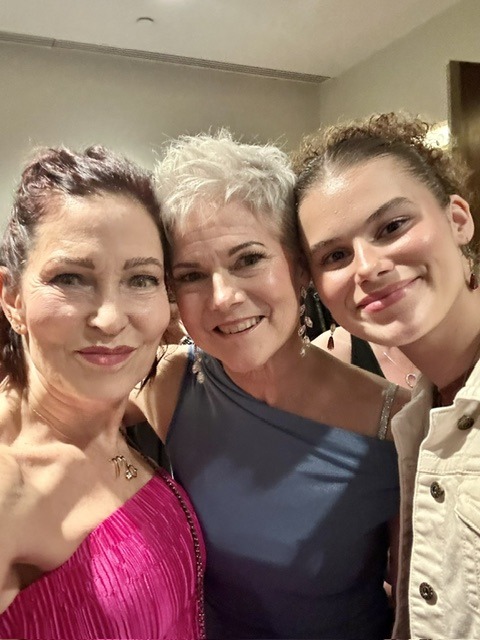
A selfie on the street.
A chance encounter in a restaurant.
A dance floor.
A room full of fitness graduates.
Or even from a MO’ment when you realize that you need to change your own mindset to continue showing up for others.
That was one of my biggest personal lessons this year. Circumstances and situations were happening around me, and things I was carrying quietly in the back of my mind could easily have influenced how I showed up.
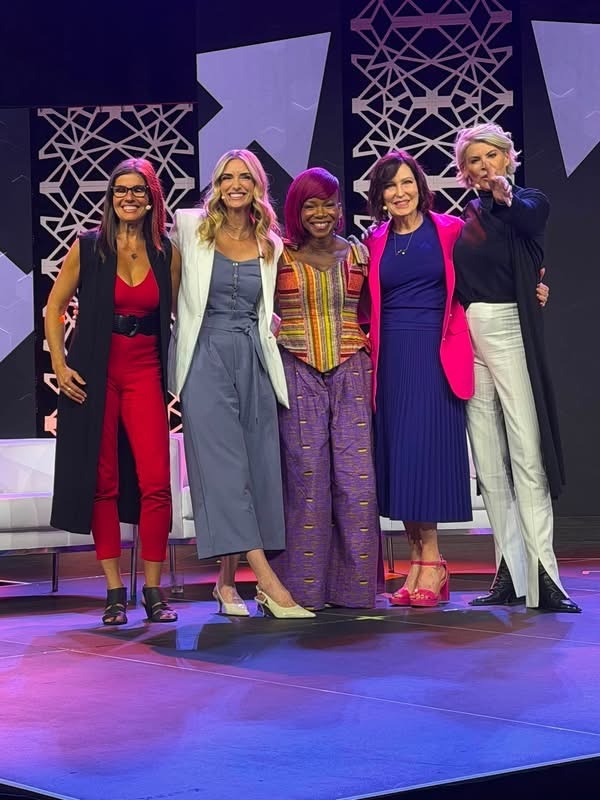
But the theme of UNITE: The Power of Us became personal for me.
I realized that if I wanted to continue being the leader others needed me to be, I had to consciously reframe my mindset. Not ignore what was happening. Not pretend everything was perfect. But choose how I was going to arrive in each moment.
How was I going to show up?
How could I be present?
How could I contribute?
How could I unite rather than allow circumstances to divide my attention or my energy?
That was a powerful lesson for me, and one I will carry well beyond the conference.
One of my favourite things about canfitpro Global is that it never really feels like just a conference.
It feels like an annual reunion. You turn a corner, and suddenly there’s a presenter you haven’t seen in a year. You run into favourite presenters in the gym, some who have travelled from the other side of the world, and suddenly, it feels less like a conference and more like coming home.
Someone else on the street.
Another friend in a restaurant.
Someone you haven’t seen in months appears on an escalator.
And suddenly you’re catching up as if no time has passed at all.
This year, I had the added privilege of meeting so many incredible presenters, some for the first time and some after years of knowing their work.
One of those special connections was Tanya Thompson, joining us virtually from Cape Town, South Africa.
Tanya was named this year’s canfitpro Global Online Presenter of the Year, and getting to know her and hearing her perspective reminded me once again of the incredible talent and knowledge that exists within our global fitness community. After more than three decades in this industry, I still get excited about meeting people who are passionate about teaching and imparting knowledge.
That is the gift of learning.
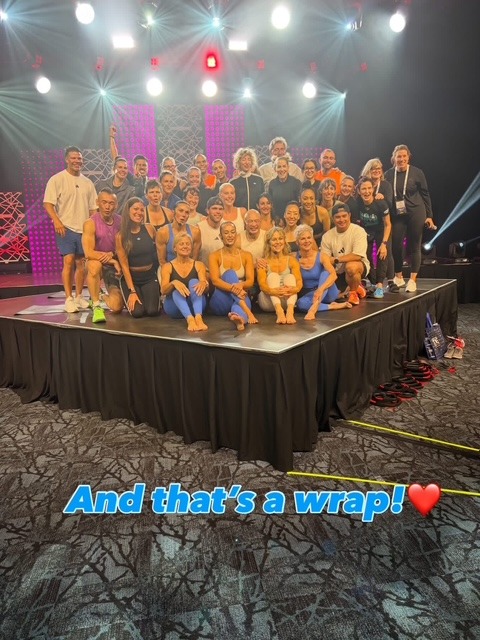
Another MO’ment that always gets me is celebrating the graduates of our Fitness Instructor Specialist and Personal Training Specialist courses. There is something incredibly rewarding about watching people reach the end of their educational journey and celebrate what they’ve accomplished.
But here’s what I love most: They’re not really at the end. They’re at the beginning. They have arrived at one destination and are now ready to begin another chapter. Watching them cross that finish line reminds me that education isn’t about collecting certificates.
It’s about becoming.
Becoming more knowledgeable.
More confident.
More capable.
And ultimately, more equipped to make a difference in someone else’s life.
This year, I also had the opportunity to spend more time with our incredible Volunteer Team Leaders.
Many of these leaders return year after year, and not just some, but many have been doing it for a decade or more!
I’ve always known they were dedicated. I’ve always appreciated their passion. But this year I got to see something I hadn’t fully appreciated before.
They are deeply connected to canfitpro, and to the delegates. They aren’t simply volunteering at an event. They are part of a community. They know each other. They support each other. They care about the experience they’re creating for everyone who walks through those doors. And, oh my gosh, they work incredibly hard.
I got a pretty good demonstration of that on Saturday morning when I joined them to help set up 350 BODYPUMP sets and steps for the Les Mills Experience. Let’s just say…I have a whole new level of appreciation for what happens before many attendees open their eyes!
These leaders are proof that UNITE isn’t just a theme. It’s something you can see, feel, and experience when people come together around something they believe in.
Of course, not every MO’ment needs to be profound. Some are just plain fun. Friday night’s VIP and Presenter Party was one of those moments. I had the absolute pleasure of joining about 100 guests on the dance floor as Louis Van Amstel led us through a LaBlast dance lesson, and it was every bit as fun as it sounds. DJ Donovan was originally supposed to give Louis two songs. Two songs became five. Because sometimes, when talented people get together, you just let them jam!
And that’s another thing I love about our industry: we work hard, we learn, we lead, we educate, and we also know how to celebrate.
We work hard.
We learn.
We lead.
We educate.
But we also know how to celebrate.
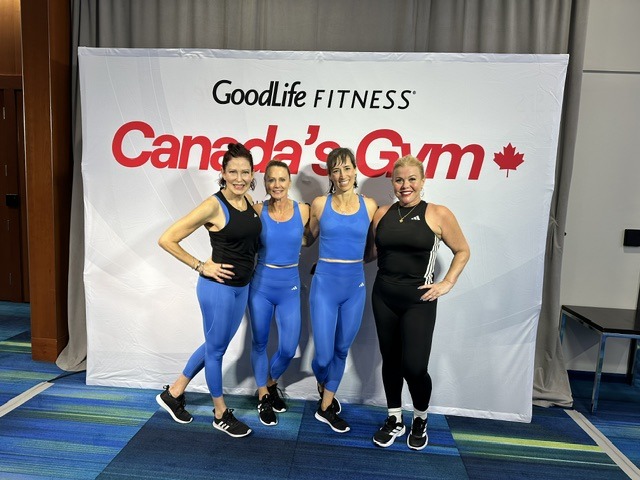
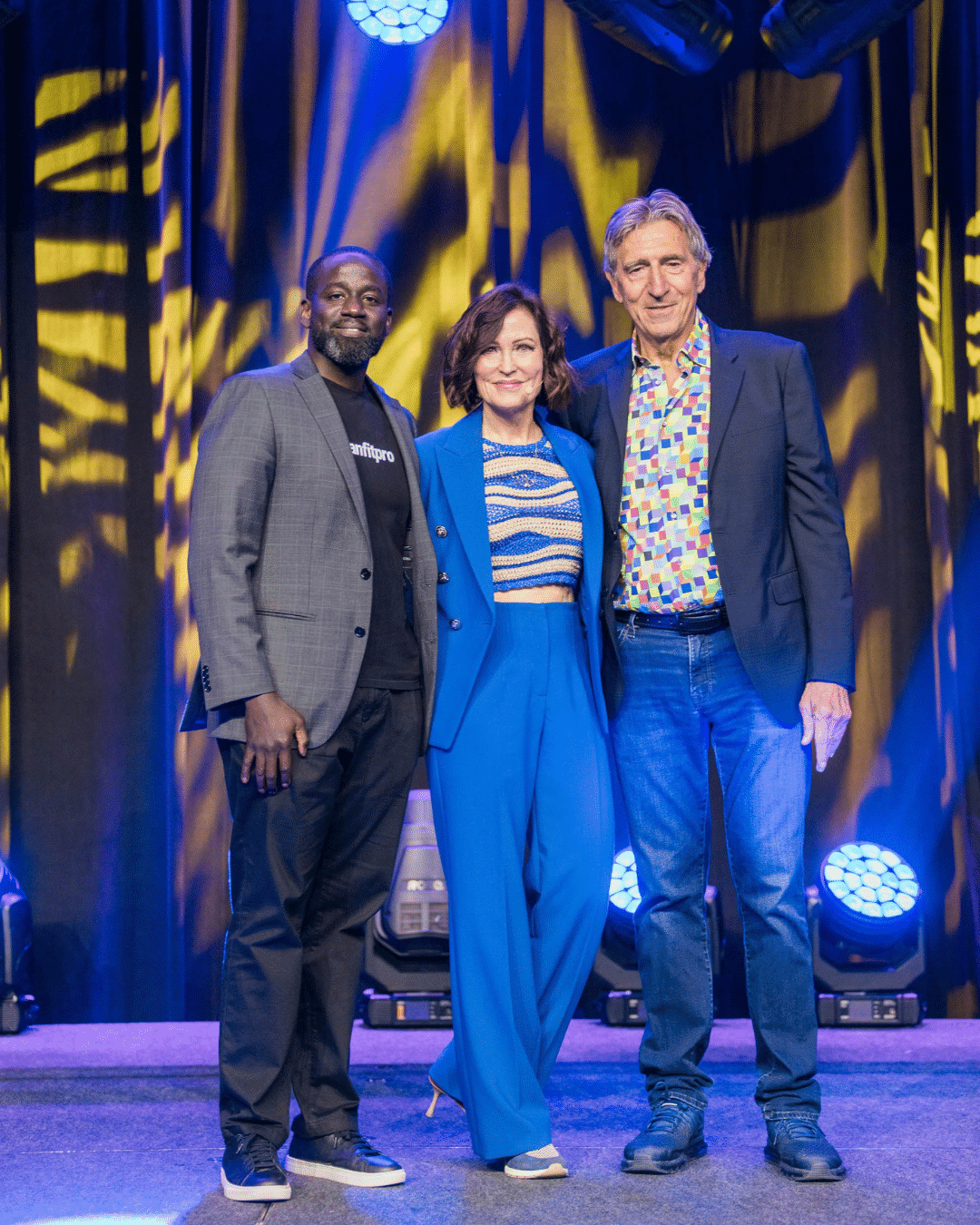
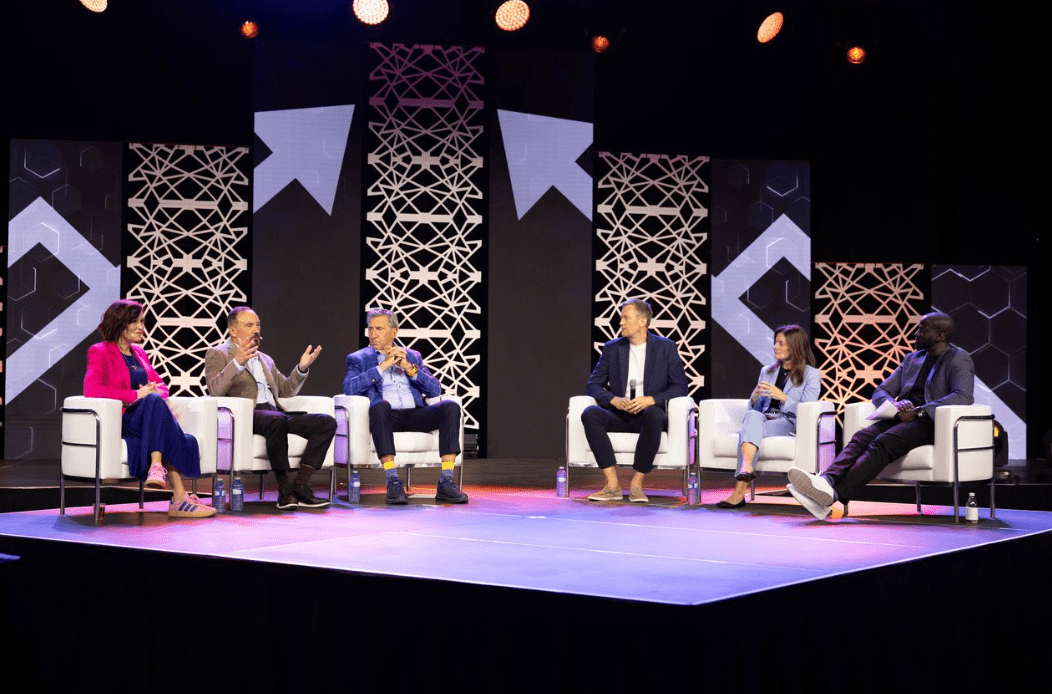
And then came one of my biggest personal highlights of the entire weekend: NEWBODY: Move for Life. I was joined by two of the most talented presenters I know, Sue Staresinic and Tracy Sousa, and together we shared a moment I will not soon forget. This year, Gail MacNeil earned her spot on stage as our NEWBODY featured presenter, and she was not disappointed. She worked hard to master the choreography, elevate her presentation skills, and fully embrace the learning process that came with this opportunity. Watching her receive a hug from her Group Experience Divisional Manager, followed by loud cheers from the audience, left me speechless.
This year, more people showed up for NEWBODY than we have seen in years, and honestly, that meant so much to me. I know what this program can do. I have believed in NEWBODY for decades, but there is something incredibly fulfilling about watching more people experience it for themselves.
Seeing that room move together, feel stronger, and discover the joy of functional movement was one of those moments where I thought, “Yes. This is why we keep going.” Sometimes your greatest reward is not creating something. It is watching other people finally discover what you have known all along.
Presenting awards is always a special part of canfitpro Global for me.
Every year, I’m reminded of just how many talented, passionate, and committed people are making a difference in our industry. Standing on that stage gives me the privilege of celebrating them publicly, but it also allows me to connect with their stories.
And one award carries an especially deep place in my heart: the Sharon Mann Inspiration Award. Presenting this award allows us to honour an extraordinary presenter and human being while continuing the legacy of my dear friend Sharon Mann. Sharon left us in 2019, but her impact didn’t leave with her. Her legacy continues through the people she inspired, the lives she touched, and now through the recipient of this award – Kelsey Vickers (Fit & Fierce). That is the power of legacy. Our lives may have a beginning and an end, but our influence can continue far beyond us.
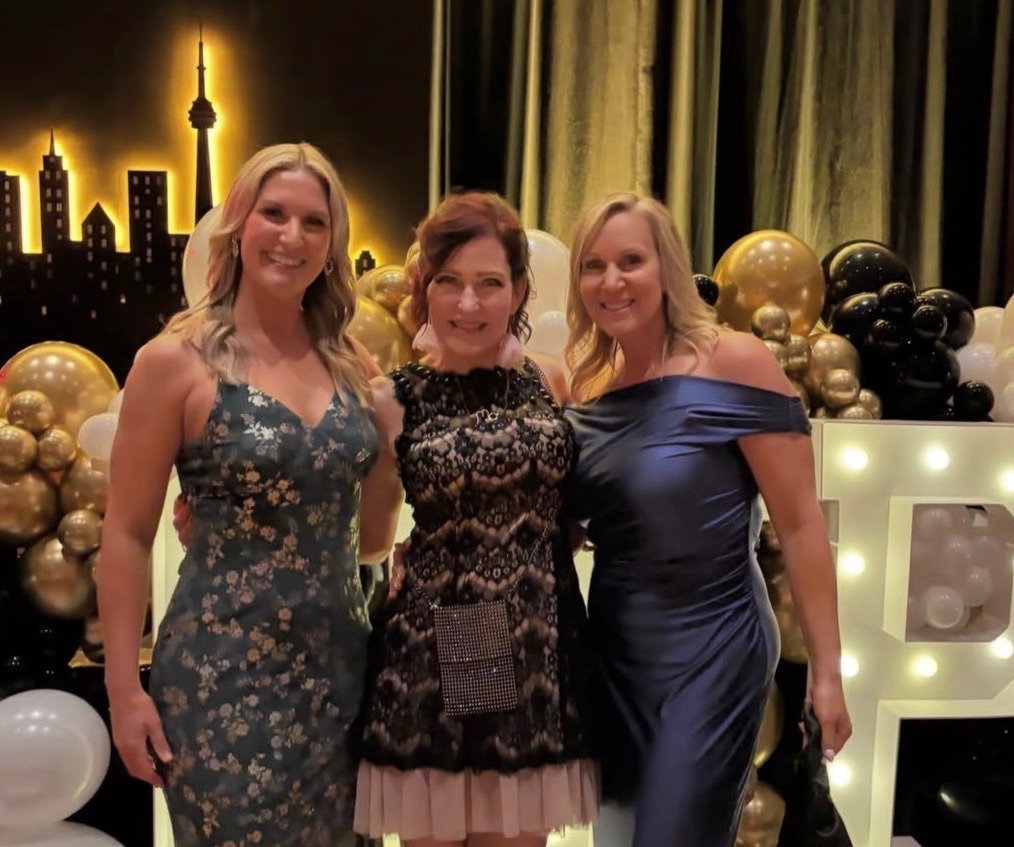
One of my favourite traditions has become my annual Blue Jays game with the GoodLife leaders. I always love it when the Jays are playing in Toronto during canfitpro weekend because it gives us another opportunity to connect outside of the conference environment, even when you arrive at the top of the 9th inning (LOL). And then, as the weekend comes to a close, there is the GoodLife Gala and after-party.
Different setting.
Same people.
Much different dress.
More stories.
Many more awards.
More laughter.
Some tears.
More memories.
And this year, one of my biggest full-circle MO’ments was seeing three dear friends: Darin Dieterich, AJ Green and Barbara Klein, who made the trip from Germany to Toronto for canfitpro #33. Seeing them there was emotional. Because 33 years of canfitpro is not just a number. It’s 33 years of friendship. It’s people who have walked alongside me and canfitpro through different chapters, different seasons and different versions of this industry. Seeing Darin, AJ and Barbara in Toronto felt like one big circle of life moment which will become even more meaningful for me very soon. People who were part of the journey then, showing up to be part of the journey now.
That’s arrival.
After 33 years, I learned something again. I learned several things:
That education never ends.
That leadership requires us to continually work on ourselves.
That sometimes the most important thing we can change is our mindset.
That people are what make an event unforgettable.
That community doesn’t happen by accident.
That volunteers can become family.
That graduates remind us why education matters.
That dancing can turn two songs into five.
That NEWBODY still has so much life ahead of it.
That awards are really about people, stories and legacy.
And that after all these years, I am still incredibly grateful to be surrounded by people who teach me something new.
This year, I didn’t just arrive at canfitpro Global. I arrived more aware—more aware of what I was carrying, how I wanted to show up, the people around me, and the privilege of being part of this incredible industry. And perhaps most importantly, I arrived more aware that arrival doesn’t mean you’ve reached the end. It means you’re ready for what’s next.
So, as September begins and we all move into another season of work, learning, and life, my challenge to you is simple: don’t ever stop learning. And don’t limit learning to what’s required for your job. Learn something about yourself. Learn something that makes you curious, challenges your thinking, makes you better at what you do, and helps you become a better human being.
Because after 33 years, I’m still learning, still growing, still being surprised, still being inspired, and still finding new ways to MO’ve beyond what I thought was possible. Maybe that’s the real meaning of arrival—not that you’ve finally arrived, but that you’re fully present where you are, grateful for how far you’ve come, and excited about where you’re going next. Here’s to the next MO’ment. Keep learning. Keep growing. Keep uniting. And keep arriving.
Every year there comes a moment when months of [...]
here comes a MO’ment in every journey when preparation [...]
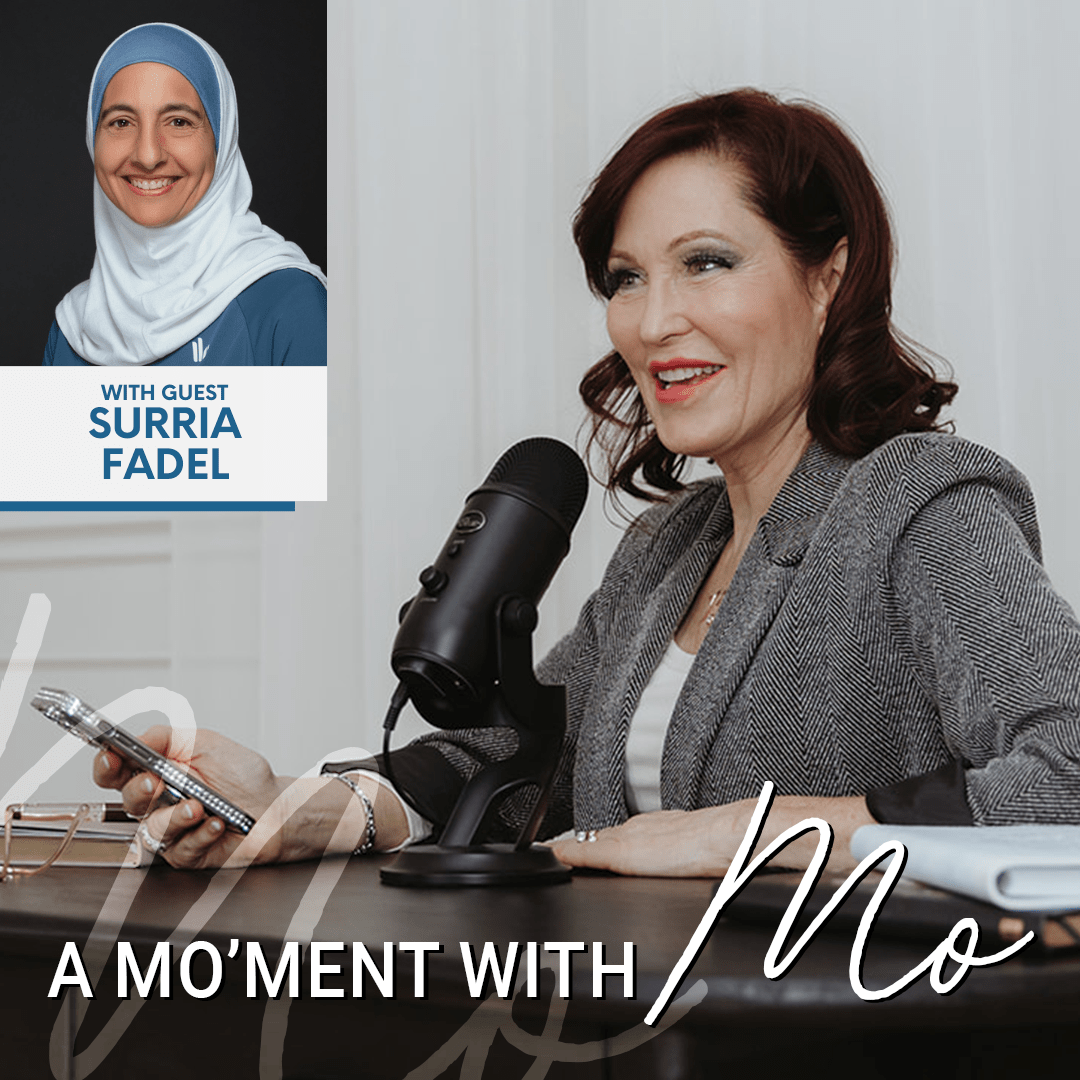
A Conversation with Surria Fadel
Mo: Surria, welcome to the show. I am so happy to have you here.
Surria: Thank you, Mo. It is an absolute pleasure. We have known each other for so many years, and reconnecting like this feels wonderful.
Mo: We first met through the fitness industry, where you were an award-winning personal trainer, group fitness instructor, coach, and pain management therapist. Looking back, do you see a connection between the coach you were then and the entrepreneur you are today?
Surria: Absolutely. Fitness taught me how to listen, coach, encourage, and help people believe in themselves. It also taught me how to overcome objections, which has been incredibly valuable in business.
Surria: When my son Ameen and I started Cedar Valley, we heard a lot of noes from retailers. I always told him that no does not necessarily mean no. It often means not now. You have to keep showing up, keep asking, and wait for the right opportunity.
Mo: I love that idea of redefining no as not now. Cedar Valley began as a project with your then 16-year-old son. Did you ever imagine it would become the company it is today?
Surria: Not at all. Ameen received a high school grant to start a business and needed my recipes and help in the kitchen. I thought it would simply be a school project.
Surria: At the time, I was 52 and expected fitness to be my retirement career. I had no intention of becoming an entrepreneur. But life had a different plan, and that project eventually became Cedar Valley.
Mo: What gave you the courage to begin again at that stage in your life?
Surria: I grew up with an entrepreneurial father, so change and risk were part of my childhood. We experienced highs and lows, and I learned early that change is constant.
Surria: I never thought I wanted that kind of life for myself, but when the opportunity came through my son, I decided to try. I realized that if it did not work, I could return to fitness. The real regret would have been never trying at all.
Mo: What would you say to women who are sitting on a dream and wondering whether it is too late?
Surria: It is never too early and never too late. We often create barriers for ourselves because we are afraid of failure or worried about what other people may think.
Surria: Failure is part of the process. Anyone who says they built a business without making mistakes is not telling the whole story. The important thing is what you do after the failure.
Mo: Was there a moment when you seriously considered walking away from Cedar Valley?
Surria: There were several. One of the hardest happened when we were producing dressing at a government facility and an entire batch became contaminated. We had to throw away thousands of dollars in product at a time when we could not afford the loss.
Surria: I walked outside, slid down the wall, and cried. My daughter called and asked me why I kept going. That question brought me back to my why.
Surria: Every time I felt ready to quit, a customer would contact us and explain how our products had helped their family. Mothers would send videos of their children eating vegetables because they loved our dressing. Those messages reminded me that what we were creating mattered.
Mo: Knowing your why seems to have been central to your perseverance.
Surria: It has been everything. When you know why you are doing something, the difficult days become more manageable. It does not make the journey easy, but it makes it possible to keep going.
Surria: Passion also helps quiet the self-doubt. When you deeply believe in the work, that passion gives you the energy to continue through uncertainty and setbacks.
Mo: Cedar Valley later appeared on Dragons’ Den, where you received an incredible offer from Arlene Dickinson. What was that experience like?
Surria: We appeared on the show in 2023 and asked for $250,000 for five percent of the company. Arlene loved the chips and offered us $1 million for 20 percent.
Surria: We were thrilled because she respected our valuation, and we accepted the offer on the show. At the time, we needed the investment to build our manufacturing facility.
Mo: But you ultimately decided not to move forward with the deal.
Surria: That is right. During the due diligence process, we received government funding through an interest-free loan. It gave us what we needed while allowing us to keep the company family-owned.
Surria: Saying no to Arlene was incredibly difficult because we respected her so much, but it was the right decision for our business at that time.
Mo: You recently said yes to another major opportunity after initially turning it down. Can you share a little about that?
Surria: A production team contacted us after seeing a video about Cedar Valley becoming the official snack of the OHL. They invited Ameen and me to apply for a major Canadian summer reality show.
Surria: When I watched the show, my first reaction was absolutely not. I was 62, and the physical challenges were far outside my comfort zone.
Surria: My children reminded me of the advice I had always given them: you can do hard things, but you have to be willing to try. They encouraged me to take my own advice, so I said yes.
Mo: What made you decide the experience was worth taking on?
Surria: I wanted to represent my culture, my faith, mothers, grandmothers, and women who may not see themselves in those spaces. I wanted other women to see that age, clothing, faith, or expectations do not have to limit what is possible.
Surria: The show accommodated my religious and personal needs, and that allowed me to participate without compromising who I am.
Mo: What did that experience teach you?
Surria: It taught me that we are capable of much more than we think. I had to live with uncertainty every day because we never knew what challenge, destination, or mode of transportation was coming next.
Surria: It was one of the hardest things I have ever done, but it was also one of the most rewarding. I hope my granddaughters see it and think that if their grandmother could do that, they can do hard things too.
Mo: You also spend time mentoring women entrepreneurs. What is one piece of advice you give them?
Surria: Ask questions. Do not let ego stop you from learning. There is no shame in admitting that you do not know something.
Surria: We built Cedar Valley by asking retailers, government departments, vendors, manufacturers, and other entrepreneurs question after question. Surround yourself with people who have experience, stay curious, and do not try to reinvent everything on your own.
Mo: You have also spoken about the importance of women allowing themselves to pursue their own goals.
Surria: Women often put themselves last because they feel responsible for everyone around them. There comes a point when it is okay to put yourself first and say, this is my time.
Surria: When you know your passion and your purpose, you have to be willing to get on the train. The people around you can support you and come along, but they cannot be allowed to stand in the way of your growth.
Mo: Surria, thank you for sharing your story, your wisdom, and your willingness to keep stepping into new opportunities. Your journey is a powerful reminder that reinvention is not about becoming someone entirely new. It is about becoming more of who you have always been.
From fitness to food, from Cedar Valley to Dragons’ Den, and now to another extraordinary Canadian adventure, you have shown that age is not a limitation, change can be an opportunity, and failure is never the end of the story.
As you reflect on this conversation, ask yourself: What dream have I put on hold, and what new chapter may be waiting for me?
You can listen to the full episode here:

A Conversation with Penny Phang
Mo: Penny, welcome to the show. I am so happy to have you here.
Penny: Thank you, Mo. It is wonderful to be here. Reconnecting with you after so many years feels like perfect timing.
Mo: It really does. Today we are talking about leadership, emotional resilience, stillness, and how to move from reaction into alignment. Before we dive into your work, can you share a little about the journey that led you here?
Penny: My work grew out of my own experience moving through depression and PTSD following a traumatic childhood. For many years, I overachieved without realizing I was trying to compensate for feelings of not being enough. On the outside, I looked successful, but underneath there was pressure, exhaustion, and unresolved pain.
Penny: Over time, I began exploring stillness, breathwork, movement, emotional awareness, and different ways of reconnecting with myself. Those practices helped me move through depression and eventually became the foundation of my Self-Empower work.
Mo: I love that you describe that journey not only as something difficult, but also as a gift that helped you discover your purpose.
Penny: Exactly. I did not set out to create a method or teach anyone. I had to look back and reverse-engineer what had helped me heal. That is how Self-Empower began.
Mo: You work with leaders and high performers who often look composed and successful on the outside. What are you seeing beneath the surface?
Penny: Many leaders quietly believe they are not allowed to struggle. They feel pressure to be perfect, have all the answers, and never show doubt. Even when that pressure is unconscious, it can create stress, anxiety, self-criticism, and a constant need to prove their worth.
Penny: When the mind and heart are no longer working together, we become out of alignment. We may still get things done, but it feels forced. We lead from fear, pressure, and the need to keep up instead of from clarity and purpose.
Mo: What is the first step toward finding that alignment again?
Penny: Stillness. When I say stillness, I do not mean doing nothing. You can be moving, working, speaking, and making decisions while remaining rooted in calm. You can be quick without being in a hurry.
Penny: Stillness helps us access a deeper intelligence within ourselves. When we slow down enough to listen, we begin receiving clarity one moment at a time. We may not see the entire path ahead, but we can recognize the next step.
Mo: You also talk about following the path of least resistance. What does that mean?
Penny: It means meeting yourself where you are. When I was deeply depressed, positive affirmations would not have helped me. They were too far away from what I was feeling. Anger, however, was a higher emotional state than despair, so allowing myself to feel angry could help me move forward.
Penny: The path of least resistance is not the same for everyone. It is simply the next thought, feeling, or action that helps move you slightly above where you are right now.
Mo: In a culture that celebrates hustle and constant productivity, how can stillness become a leadership strength?
Penny: Leaders can accomplish a great deal without stillness, but it often comes at a cost. Over time, excessive resistance can lead to stress, anxiety, exhaustion, and dis-ease.
Penny: Sustainable leadership requires access to something deeper and more dependable than external conditions. Stillness gives leaders a stable place from which to think, respond, and make decisions. That is where clarity becomes a true advantage.
Mo: You have also shared a simple way to manage difficult thoughts before they take over. Can you explain that?
Penny: I call it the combustion of thought. A thought begins gaining momentum quickly, and if we continue focusing on it, more similar thoughts join it. That is why I encourage people to give themselves up to 60 seconds to fully feel an emotion without judgment.
Penny: Resistance is not wrong. We need some resistance to generate power, just as a battery needs positive and negative energy. The key is not staying there. After 60 seconds, ask whether this is a thought you want to continue feeding. If not, swipe to the next thought.
Mo: I love that. We are so good at swiping past content on our phones, but we can learn to do the same with thoughts that are no longer serving us.
Penny: Exactly. The brain is constantly feeding us content. Some of it matters and some of it does not. We have to become more intentional about what we choose to amplify.
Mo: How can leaders recognize when they are reacting instead of acting from alignment?
Penny: Your emotions will tell you. When you are aligned, you may still feel pressure, but you also feel clear, curious, open, and willing. When you are reacting, you tend to feel stuck in stress, fear, doubt, or resistance.
Penny: My practice is to observe and then lead. Take a breath, soften your vision, and notice what is happening within you. You are not your thoughts. You are the quiet presence observing them.
Mo: And once we observe the thought, how do we decide what to do next?
Penny: Ask yourself three questions. Is this a thought I want to say yes to and amplify? Is there an action I can take right now, or am I simply worrying? What is my right-now action?
Penny: Sometimes the answer is to finish the email in front of you. Sometimes it is to drink water, take a break, listen to the person speaking, or focus on the road while driving. The next aligned action is often very simple.
Mo: That is such an important reminder. Growth does not always come from pushing harder. Sometimes it comes from being more intentional with where we place our energy and attention.
Penny: Absolutely. Many of the problems we work so hard to solve do not require more action or more thought. They require us to become still enough for the mind and heart to work together.
Mo: Penny, thank you for sharing your story, your wisdom, and such practical tools for becoming more present and aligned. This conversation is a powerful reminder that clarity, calm, and presence are not luxuries in leadership. They are necessities.
Sometimes our greatest momentum does not come from doing more. It begins when we pause long enough to reconnect with ourselves, listen to what we truly need, and move forward with greater purpose.
You can listen to the full episode here:
There is something powerful about May.

After months of shorter days, colder temperatures, and unpredictable [...]

March | International Women’s Day Reflection
March is a powerful month of reflection, celebration, and recommitment. Each year, International Women’s Day invites us to recognize not only how far women have come but how we choose to lead, lift, and create opportunity for those rising behind us.
This month began for me at Western University, returning to the place where my own journey in science and movement truly began. I had the honour of participating in Western’s STEMposium a day focused on women in STEM, exploring careers, confidence, and choice. Standing on that panel felt both grounding and full circle. It reminded me that careers are rarely built in straight lines they are built through curiosity, courage, and the willingness to evolve.
Grounded in Science, Guided by Purpose
My career began deeply rooted in science, anatomy, physiology, biomechanics, through my education in physiotherapy and movement science. What fascinated me early on was how the human body adapts, heals, and performs when movement is applied intentionally While my initial passion was to serve the injured and critically ill as a physiotherapist, my curiosity expanded beyond the clinical environment. I saw a gap between healthcare and fitness, two worlds that should work together more intentionally and I built my career at the intersection of both.
Over the past 40+ years, I’ve worked as a practitioner, educator, leader, and advocate, helping elevate standards, professionalize fitness, and position movement as a critical part of healthcare. I didn’t follow a predefined path. I followed my values, my curiosity, and the impact I wanted to make
Careers Are Choices Not Checklists
Students often ask whether they should pursue graduate school, industry, or something else entirely. My answer is rarely about titles. It’s about alignment.
I encourage three reflections:
If clarity doesn’t come immediately, I share Stephen Covey’s reminder to begin with the end in mind. When you envision how you want to serve the world, who you want to help and what problems you want to solve, your decisions become intentional, not reactive.
There is no single “right” path. Most careers are nonlinear. What matters is staying curious, building transferable skills, and giving yourself permission to pivot.
Leadership Modeled: Women Who Build What Doesn’t Yet Exist
One of the most powerful validations of women’s leadership is seeing women build careers that are true to their strengths not templates.
A prime example is this month’s podcast episode, A MO’ment with MO with guest, Michele Colwell, Executive Vice President at GoodLife Fitness. Early in her career, Michele recognized an unmet need and went on to create and launch GoodLife’s Personal Training department, a move that didn’t just grow the business, but reshaped how personal training was valued and delivered across the industry. That moment matters.
It reinforces what I’ve seen throughout my career: women don’t just lead teams they lead innovation. They see what’s missing, ask better questions, and build what doesn’t exist yet. Michele’s journey is proof that when women lead authentically, businesses don’t just grow they evolve.
Confidence Follows Courage Not the Other Way Around
I’m often asked if I’ve ever felt underqualified. The answer is yes, many times! I’ve learned that feeling underqualified is often a signal of growth. Instead of treating it as doubt, I treat it as data. What do I need to learn? Who can I learn from?
Confidence doesn’t come before competence. It comes from building it. And one of the most common patterns I see, especially among women, is waiting to feel “ready” before stepping forward. Growth happens when we step forward anyway.
Learning, Leadership & Bringing Other Women With You
This belief that leadership grows stronger when shared is why I continue to prioritize spaces designed by women, for women, grounded in learning and leadership.
Each year, I am proud to attend the All Women L.E.A.D. event held in London, ON and I intentionally bring other women with me. Leadership isn’t meant to be experienced alone. All Women L.E.A.D. embodies what I believe in most: lifelong learning, courageous leadership, shared wisdom, and collective growth. When women gather in rooms designed to challenge and support them, confidence grows, ideas sharpen, and possibilities expand. Just like STEM, leadership is a discipline and the more we practice it together, the stronger we become.
International Women’s Day: Giving So Others Can Gain
International Women’s Day reminds us that leadership is not about climbing alone. It’s about creating space, opening doors, and using influence to lift others. When women lead with intention, when we bring others into learning spaces, and when we use our platforms to amplify voices beyond our own, we don’t lose power, we multiply it. That is how we build stronger businesses, stronger leaders and a future where women in STEM and leadership don’t just participate, they shape what comes next.
This month, my invitation is simple:
Stay curious. Stay grounded in science. Lead with courage. And wherever you rise bring other women with you.

As we arrive in December, I find myself reflecting on the guiding intention that shaped my 2025 workbook: Elevating 2025—Energy, Growth, and Becoming More. When I launched this guide back in January, my message was simple yet powerful: If it is to be, it is up to me. This became my compass throughout the year, a reminder that who we become is built not in grand gestures, but in daily decisions, habits, and MO’ments rooted in purpose.
This year invited us to elevate our energy, stretch our growth, and step boldly into the process of becoming more—not because a calendar told us to, but because our potential called us forward. The workbook encouraged you to look at your life, your health, your learning, and your leadership through a lens of possibility. To choose vitality, embrace challenge, and honour the person you are becoming.
Now, as 2025 winds down, I want to remind you of something essential:
There is nothing magical about January 1st.
The magic comes from you.
You don’t need a new year to recommit to yourself. You don’t need a Monday to reset. You don’t need a resolution to give yourself permission to grow. These final days of 2025 are fertile ground—an invitation to finish the year not with pressure, but with presence.
Instead of waiting for a symbolic fresh start, ask yourself:
This is how you close a year with intention: not by hustling to the finish line, but by choosing one aligned step at a time.
And as I look toward 2026, I feel a new chapter pulling me forward—one that will include reinvention, renewal, and redefining what “next level” means for me personally and professionally. I haven’t found my word for the year yet, but a few are whispering to me:
Reinvent. Evolve. Rise. Reimagine. Liberate. Illuminate.
Each carries the spirit of where 2025 has brought me—and where I feel called to go next.
Perhaps one of these words speaks to you too. Or perhaps your word is waiting patiently for you to slow down just long enough to hear it.
My encouragement to you is this:
Here’s to closing with purpose, stepping forward with clarity, and becoming MO’re—today, tomorrow, and in the year ahead.
Happy holidays, Mo