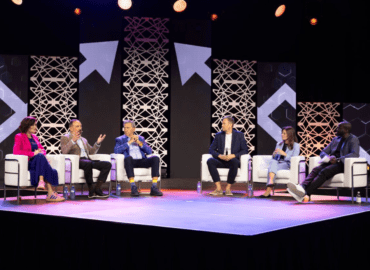


A Conversation with Surria Fadel
Mo: Surria, welcome to the show. I am so happy to have you here.
Surria: Thank you, Mo. It is an absolute pleasure. We have known each other for so many years, and reconnecting like this feels wonderful.
Mo: We first met through the fitness industry, where you were an award-winning personal trainer, group fitness instructor, coach, and pain management therapist. Looking back, do you see a connection between the coach you were then and the entrepreneur you are today?
Surria: Absolutely. Fitness taught me how to listen, coach, encourage, and help people believe in themselves. It also taught me how to overcome objections, which has been incredibly valuable in business.
Surria: When my son Ameen and I started Cedar Valley, we heard a lot of noes from retailers. I always told him that no does not necessarily mean no. It often means not now. You have to keep showing up, keep asking, and wait for the right opportunity.
Mo: I love that idea of redefining no as not now. Cedar Valley began as a project with your then 16-year-old son. Did you ever imagine it would become the company it is today?
Surria: Not at all. Ameen received a high school grant to start a business and needed my recipes and help in the kitchen. I thought it would simply be a school project.
Surria: At the time, I was 52 and expected fitness to be my retirement career. I had no intention of becoming an entrepreneur. But life had a different plan, and that project eventually became Cedar Valley.
Mo: What gave you the courage to begin again at that stage in your life?
Surria: I grew up with an entrepreneurial father, so change and risk were part of my childhood. We experienced highs and lows, and I learned early that change is constant.
Surria: I never thought I wanted that kind of life for myself, but when the opportunity came through my son, I decided to try. I realized that if it did not work, I could return to fitness. The real regret would have been never trying at all.
Mo: What would you say to women who are sitting on a dream and wondering whether it is too late?
Surria: It is never too early and never too late. We often create barriers for ourselves because we are afraid of failure or worried about what other people may think.
Surria: Failure is part of the process. Anyone who says they built a business without making mistakes is not telling the whole story. The important thing is what you do after the failure.
Mo: Was there a moment when you seriously considered walking away from Cedar Valley?
Surria: There were several. One of the hardest happened when we were producing dressing at a government facility and an entire batch became contaminated. We had to throw away thousands of dollars in product at a time when we could not afford the loss.
Surria: I walked outside, slid down the wall, and cried. My daughter called and asked me why I kept going. That question brought me back to my why.
Surria: Every time I felt ready to quit, a customer would contact us and explain how our products had helped their family. Mothers would send videos of their children eating vegetables because they loved our dressing. Those messages reminded me that what we were creating mattered.
Mo: Knowing your why seems to have been central to your perseverance.
Surria: It has been everything. When you know why you are doing something, the difficult days become more manageable. It does not make the journey easy, but it makes it possible to keep going.
Surria: Passion also helps quiet the self-doubt. When you deeply believe in the work, that passion gives you the energy to continue through uncertainty and setbacks.
Mo: Cedar Valley later appeared on Dragons’ Den, where you received an incredible offer from Arlene Dickinson. What was that experience like?
Surria: We appeared on the show in 2023 and asked for $250,000 for five percent of the company. Arlene loved the chips and offered us $1 million for 20 percent.
Surria: We were thrilled because she respected our valuation, and we accepted the offer on the show. At the time, we needed the investment to build our manufacturing facility.
Mo: But you ultimately decided not to move forward with the deal.
Surria: That is right. During the due diligence process, we received government funding through an interest-free loan. It gave us what we needed while allowing us to keep the company family-owned.
Surria: Saying no to Arlene was incredibly difficult because we respected her so much, but it was the right decision for our business at that time.
Mo: You recently said yes to another major opportunity after initially turning it down. Can you share a little about that?
Surria: A production team contacted us after seeing a video about Cedar Valley becoming the official snack of the OHL. They invited Ameen and me to apply for a major Canadian summer reality show.
Surria: When I watched the show, my first reaction was absolutely not. I was 62, and the physical challenges were far outside my comfort zone.
Surria: My children reminded me of the advice I had always given them: you can do hard things, but you have to be willing to try. They encouraged me to take my own advice, so I said yes.
Mo: What made you decide the experience was worth taking on?
Surria: I wanted to represent my culture, my faith, mothers, grandmothers, and women who may not see themselves in those spaces. I wanted other women to see that age, clothing, faith, or expectations do not have to limit what is possible.
Surria: The show accommodated my religious and personal needs, and that allowed me to participate without compromising who I am.
Mo: What did that experience teach you?
Surria: It taught me that we are capable of much more than we think. I had to live with uncertainty every day because we never knew what challenge, destination, or mode of transportation was coming next.
Surria: It was one of the hardest things I have ever done, but it was also one of the most rewarding. I hope my granddaughters see it and think that if their grandmother could do that, they can do hard things too.
Mo: You also spend time mentoring women entrepreneurs. What is one piece of advice you give them?
Surria: Ask questions. Do not let ego stop you from learning. There is no shame in admitting that you do not know something.
Surria: We built Cedar Valley by asking retailers, government departments, vendors, manufacturers, and other entrepreneurs question after question. Surround yourself with people who have experience, stay curious, and do not try to reinvent everything on your own.
Mo: You have also spoken about the importance of women allowing themselves to pursue their own goals.
Surria: Women often put themselves last because they feel responsible for everyone around them. There comes a point when it is okay to put yourself first and say, this is my time.
Surria: When you know your passion and your purpose, you have to be willing to get on the train. The people around you can support you and come along, but they cannot be allowed to stand in the way of your growth.
Mo: Surria, thank you for sharing your story, your wisdom, and your willingness to keep stepping into new opportunities. Your journey is a powerful reminder that reinvention is not about becoming someone entirely new. It is about becoming more of who you have always been.
From fitness to food, from Cedar Valley to Dragons’ Den, and now to another extraordinary Canadian adventure, you have shown that age is not a limitation, change can be an opportunity, and failure is never the end of the story.
As you reflect on this conversation, ask yourself: What dream have I put on hold, and what new chapter may be waiting for me?
You can listen to the full episode here: